Melancholy and Depression Not quite the same thing

Part of a letter on Archetypal Studies in Melancholy and Depression. Jan 2025.

Living the Blues.

“Depression, or Melancholy Without the Gods”, James Hillman, 1999.1
“Depression is Melancholy minus its charms”, Susan Sontag, 1978.2
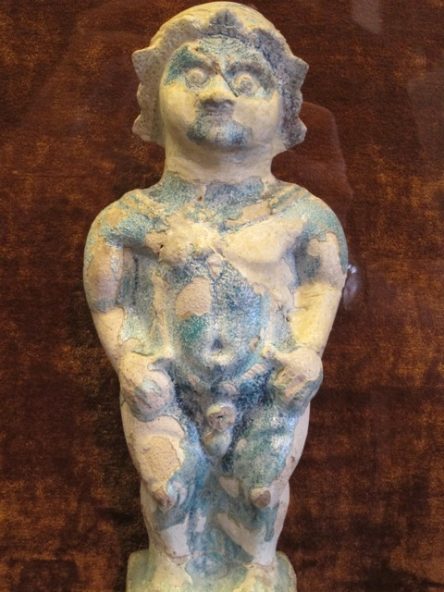
Living the Blues.3

Shades of Blue.4
Hillman’s quote references melancholy as a condition of the soul and archetypal reality, while Sontag’s context is the cultural, sociological, and personal meaning. Despite the 20 years between these quotes, both writers understand melancholy, the term used to describe a particular disposition and behaviour for over 2000 years, as something different from the modern term, depression. And both draw from historical ideas on the subject.

A Fairly Depressing History of the Blues.5
2400 years ago, Hippocrates describes ‘fear and sadness lasting a long time’ as melancholy, that is, literally, ‘black bile’, produced in excess by the spleen.6 His ‘four humours’ theory7 maintained its central position in medicine for the next 2000 years. But views on melancholy itself shifted like the tides.

100 years after Hippocrates, Aristotle, around 300 BCE, associates melancholy with imagination and says that it is an oscillation between genius and madness. Galen, around 200 CE, adds delusions to the list of symptoms. In Middle-Ages Europe, between 500 and 1500 CE, the somatic four-humours paradigm of melancholy lost its place against the prevailing religious perspective. ‘Sadness’ becomes tristitia vel acedia, one of the seven vices first enumerated by Pope Gregory I in the 6th century and elaborated further in the 13th century by St. Thomas Aquinas.8 When a patient could not be cured, it was believed that the melancholia was a result of demonic possession.9

During the Renaissance, around 1500, often referred to as The Golden Age of melancholy, Ficino and others revived the idea of depression as part of artistic genius, and ‘all great philosophers, artists and poets’ are melancholic.10

In the Classical age, 1600-1800, from the completion of the Renaissance to the end of the Enlightenment, there is a new reversal: melancholy is considered an alienation of the rational mind. It must be fought with reason. Melancholy becomes a disease of wrong thinking rather than biology or a disposition influenced by the planets.

In 1621, Robert Burton published his Anatomy of Melancholy, which helped shift the idea of melancholy as a bodily illness to a disorder of the mind.11 Burton condemns this ‘melancholy fashion’, especially amongst religious people. Nevertheless, somatic treatments, such as bloodletting, and restricted diet,12 continue, to treat ‘disorders of the nerves’.

Michel Foucault’s ‘Madness and Civilisation’ highlights the next shift from the ‘great confinement’, after Descartes’ philosophy of reason13 and the creation of the General Hospital in 1656.14 ‘Fools’ and other ‘undesirables’ require isolation. From 1656, one in a hundred inhabitants, including melancholics, were interned in Paris for being ‘unreasonable’ and therefore fools.

The Romantic era, at the start of the 19th century, after the social disruptions of the French Revolution, saw a revival of melancholy as a position of honour for sensitive individuals, who must separate themselves from society.15

After the ‘great confinement’, a growing population of ‘crazy, vagabonds, foolish, bad women, and libertines’ is relegated to General Hospitals. Philippe Pinel16 visits these places and establishes the ‘moral treatment’ of ‘fools’ through an interpersonal relationship between the doctors and the madman. And publishes his work in 1801. And here we have the birth of psychiatry.17

Esquirol (1772-1840), pupil of Pinel, says that the term melancholy defines a habitual state of sadness of certain individuals, and ‘must be reserved for moralists and poets’. Falret (1794-1870) develops a new form of ‘moral treatment’: bullying. The mad must be made to give up their wrong thinking and behaviour under penalty of sanctions.

And by the late nineteenth century, there is a new theory of melancholy – degeneration. Morel (1809-1873) proposes the ‘physical, intellectual and moral degenerations of the human species’, bringing in sociological factors. Intoxication, alcoholism, misery, and more, are progressive hereditary issues, and this is at the root of the various mental disorders. This theory branches out into theories of social hierarchy, racial prejudice and the rise of fascism.18

Kraepelin published his ‘Introduction to Clinical Psychiatry’ in 1907.19 He differentiates melancholy, depressive circular states, catatonic stupor, manic-depressive mixed states, catatonic excitation and more. These are biomedical conditions that requires medical intervention, which, by the 1920’s and 1930’s, were mainly psychosurgery20, including lobotomy21, insulin ‘shock’ treatments22, and, just as Nazi Germany and fascist Italy were really getting going, electroconvulsive therapy (ECT).23

The attitude seems to be, ‘If we do not know what it is, we can at least try to get rid of it’. Neuroleptics are discovered in Paris in 1952, and the antidepressant effect of imipramine in Switzerland in 1956. And so begins the the era of commercialisation of modern psychotropic drugs.24

Freud, on the other hand, described melancholy as a psychological condition, not a disease to heal. No longer a result of humoral pathology, astrological influence, or nervous disease, melancholy arose from a disjunction in self-identity. For Freud, and his followers, Abraham and Klein, depression is the result of an oedipal or narcissistic conflict, and is a question of resolving the repressed conflict by analysing the resistances.

After Freud, the term ‘melancholy’ fell out of use, with diagnoses of depression finding favour instead.

The modern diagnostic criteria for the major depressive episode are listed in ICD-10 and the DSM-5.25 These are the ‘bibles’ guiding the diagnosis, and the medical aid monies received, for treating all psychiatric illness. Sub-divisions and made-up categories of depression ad infinitum.26 According to the American Psychiatric Association, publishers of the DSM, ‘research indicates’ that more than 17% of the world’s population suffers from major depression during their lifetime.27 Meanwhile, investigators found that 60% of the expert advisors for the DSM were paid by drug companies for their contributions.28

The current psychiatric best thinking on depression concerns ‘brain plasticity’. It’s about how antidepressant drugs and antipsychotics will rewire your brain, and grow the stuff you need, and then you won’t be depressed.29 Even though repeated research has shown that placebos work just as well as antidepressants.30 We already know it’s not what the doctor gives, but that the doctor gives.31 This thinking is also connected to ketamine therapy,32 currently the only ‘legally sanctioned’ psychedelic.33 The big news is that having a psychedelic trip can give you a spiritual experience, which can change your life and lift your depression. Which, curiously, is about finding meaning, not growing neurotransmitters.

Inside out. Upside down.

That’s the nosology.34 It describes the classification of disease based on observation and symptoms. Our noses sense that something’s off.35 For over 2000 years, medical texts36 assumed a connection between the inner person and their outside world, including the planets and the invisible forces that influenced the manifest world. For just the last 200 years, at least in the West, but increasingly all over the planet, the world has no soul and it’s all and only about the biological individual, the ego literalised, and pathology has been reduced to what can be seen and measured. Hence neurobiology, attempting to fix the brain as if that was the mind, character, or disposition.37

Back in the early 16th century, Paracelsus38 offered his view that joined practical science with a soulful perspective: ‘The physician must have knowledge of man’s other half, that half of his nature which is bound up with astronomical philosophy; otherwise he will be in no true sense man’s physician, since Heaven retains within its sphere half of all bodies and all maladies. What is a physician who knows nothing of cosmography?’ 39

Hillman agrees. He says, ‘There is something about feeling the weight of the world. That if you are not depressed with the fish turning belly up in the rivers and the trees being chopped down left and right and the rest of it, you are not living. How could the soul – your soul – not be sensitive to the soul of the world? That is one of the oldest ideas that we have in Western thought, that the soul of the world and the soul of the human being are interconnected.’ 40

The way of soul is living with uncertainty and ambiguity. ‘We are lived by forces we pretend to understand’ 41 often quoted by Hillman, pokes a finger in the forehead of the pseudo-science of clinical psychology and psychiatry.42 More absurd names might offer a temporary defence, or the illusion of control, against the interruption of the gods in our lives; and the cocktail of powerful drugs, or ECT, might numb the emotions to make a person no longer care. Repeated ketamine sessions offer short-term relief, ‘lasting for several days or even weeks’.43 But none of these address the experience of depression and anxiety,44 or what this might ask of the soul. For that, we require other ways of understanding and behaving.

The Therapeia 2025 gives attention to these matters.

1 Title of a lecture presented in 1999, and reprinted as chapter 1 of UE11, James Hillman’s ‘On Melancholy and Depression’ finally published 23-12-2024. https://www.amazon.com/MELANCHOLY-DEPRESSION-Uniform-Writings-HILLMAN/dp/0882140434/ref=tmm_hrd_swatch_0?_encoding=UTF8&qid=&sr=
2 Susan Sontag wrote: ‘Depression is melancholy minus its charms — the animation, the fits of creative anguish, the manic outbursts… Melancholy is glamorous, a romantic ‘illness.’ But depression — a term that in the nineteenth century still meant ‘a sinking or falling down’ of the spirits — is not.’ Susan Sontag, 1978, Illness as Metaphor, p45. https://www.goodreads.com/book/show/119688.Illness_as_Metaphor
3 Robert Zimmerman tells you how it is. https://www.youtube.com/watch?v=DnR8K8_RbQc
4 Although etymologically a different word, shades is cognate with ‘shaidim’, an ancient Biblical term for ‘demon spirits’. Later writers refer to melancholy as a daemon. https://en.wikipedia.org/wiki/Shedim#:~:text=Biblical%20and%20rabbinical%20texts%20depict,subject%20of%20debate%20among%20scholars Cf. Footnote 32.
5 This history is from the Western perspective, since these views dominates our society and its approach to pathology.
6 The spleen is the organ responsible for this disorder, while current medicine sees the spleen as primarily the organ of immune defences. https://en.wikipedia.org/wiki/Spleen. There is a curious link between old and modern views of the spleen’s function, especially via the HPA axis, to cortisol (moderating stress) and neurotransmitters, that relate directly to melancholy. https://en.wikipedia.org/wiki/Hypothalamic–pituitary–adrenal_axis
The Near East and the Far East have their own philosophical and medical history and traditions of understanding and treating depression, although there is common ground. Chinese meridians also connects the spleen to brain function and depression. https://pmc.ncbi.nlm.nih.gov/articles/PMC7541918/ For an example of other approaches, cf. traditional treatments for depression in Iran: https://ircmj.com/article_199660_efab7b4c3e6671851580abf0fa83d88c.pdf
7 It’s not actually Hippocrates’ system. It has earlier roots. But Hippocrates was the first to summarise the ideas around human temperament, and to link these to medicine. The body was made up of four humours: blood, phlegm, yellow bile, and black bile, and fluctuations among these elements determined the health of both the body and the mind. Each humour was linked to a particular emotional temperament, and it was believed that those with a preponderance of black bile were inclined towards melancholy and despondency. https://en.wikipedia.org/wiki/Humorism
8 The sin of acedia ‘conveys a wilful refusal of the joy that comes from God’s love’. https://www.britannica.com/topic/sloth-behaviour
9 This relates to Sheidim, Note 4, above.
10 One of the better reviews of the history of melancholy. https://www.thelancet.com/journals/lancet/article/PIIS0140-6736(08)61385-9/fulltext
11 Robert Burton. https://en.wikipedia.org/wiki/The_Anatomy_of_Melancholy This book informs Lynn Cowan’s ‘Portrait of the Blue Lady: The Character of Melancholy’, one of the primary texts for our studies.
12 Not a person you’d want to go to for a dinner party. https://themillions.com/2014/11/the-robert-burton-diet.html
15 William Savage writes historical novels. And this sweet piece. https://penandpension.com/2019/07/03/melancholy-and-the-romantic-movement/
16 A genuinely good guy. What’s happened after in psychiatry was mostly the result of his students and followers. https://en.wikipedia.org/wiki/Philippe_Pinel
17 Another decent read on the subject. https://en.wikipedia.org/wiki/Melancholia
18 The start of eugenics, ‘scientific racism’. https://pubmed.ncbi.nlm.nih.gov/39416562/ The latest iteration links to critical race theory arguments in the USA.
19 ‘Multiple personality was ending the rule of reason.. this phenomenon became the focus of the defenders of reason: psychiatrists.’ Hillman, Re-Visioning, p25.
20 A comprehensive look at psychosurgery. ‘Success rates.. in treating depression and OCD have been reported as between 25 and 70 percent. The quality of outcome data is poor and the Royal College of Psychiatrists in their 2000 report concluded that there were no simple answers to the question of modern psychosurgery’s clinical effectiveness.’ Really. It’s in the article. https://en.wikipedia.org/wiki/Psychosurgery#Medical_uses
21 Begun in the 1880’s, developed further by Moniz in the 1930’s, over 50,000 procedures were performed in the United States alone between 1936 and the mid-1950s. These operations were associated with many complications including intellectual impairment, personality change, seizures, paralysis, and death. Moniz was awarded the Nobel Prize in Medicine in 1949. Good job then! https://en.wikipedia.org/wiki/Lobotomy
22 ‘After about 50 or 60 comas, or earlier if the psychiatrist thought that maximum benefit had been achieved, the dose of insulin was rapidly reduced before treatment was stopped.’ https://en.wikipedia.org/wiki/Insulin_shock_therapy This article, and the others on psychosurgery, lobotomy, and ECT, is worth reading just to ask WTF we imagine we have learned, regarding contemporary psychiatric treatments, with multiple, debilitating, drugs and the continued use of ECT.
23 ‘In 1952, Holmberg and Thesleff pioneered “modified” (anesthetized) ECT, which further improved patient comfort and tolerability’. Gotta love that sentence. https://psychiatryonline.org/doi/full/10.1176/appi.ajp-rj.2020.160103
25 Check out some of the more recent ‘fine tuning’, ie making it up. Psych-improv. If it wasn’t so scary and impactful on actual lives, it would be funny. It’s not. https://psychcentral.com/depression/dsm-5-changes-depression-depressive-disorders#recap
26 It’s designed to confuse and enough to make you seek professional help. https://en.wikipedia.org/wiki/DSM-5
27 Do the math. Just the sheer numbers, and what this means for the pharmaceutical industry, and the number of professionals needed to support it.
28 92 individuals received $14 million for their contributions to the DSM. That’s over 1,5 million zar each. https://www.bmj.com/content/384/bmj-2023-076902
29 ‘Antidepressant therapy can exhibit effects on neuroplasticity and reverse the neuroanatomical changes found in depressed patients.’ This is a heavy-duty article about the current research. https://pmc.ncbi.nlm.nih.gov/articles/PMC8383338/
30 ‘Documents obtained from the U.S. Food and Drug Administration (FDA) revealed an explicit decision to keep this information from the public and from prescribing physicians.’ Really. https://pubmed.ncbi.nlm.nih.gov/20170046/
31 The science is clear that antidepressant psychopharmacology is essentially a scam. A kind of Ponzi scheme that relies on people who are suffering believing that, next time, or with more drugs, the miracle will work. https://childmind.org/article/is-it-true-that-antidepressants-are-no-better-than-placebos/
32 ‘What is the biological basis for ketamine’s rapid antidepressant action? One framework gaining empirical support is that ketamine promotes neural plasticity.’ https://pmc.ncbi.nlm.nih.gov/articles/PMC8190578/
33 Once an anaesthetic, then a party drug, synthetic ketamine is now the golden child of sorting out, well, almost any problem. ‘Ketamine-assisted psychedelic therapy .. induces.. important insights into the meaning of life and an increase in the level of spiritual development.’ https://pubmed.ncbi.nlm.nih.gov/9250944/ Harvard, Yale, Columbia and Wits universities have all recently published articles on the great success of using ketamine to treat depression. But only under the supervision of a qualified doctor. Apparently, the old way of taking natural psychedelics, with the guidance of a shaman, is not acceptable.
34 The branch of medical science dealing with the classification of diseases. From Greek nosos, disease.
35 Like-sounding words may have different etymologies. ‘However, an etymology based in sound associations – a method playfully practiced by Socrates.. by poets ever since, by Freud and developed into a theory.. recognises in the phonetic coincidence of like-sounding words a coupling of meaning.. an internal relation..’ James Hillman, War and Beauty, in UE8, Philosophic Intimations, p321. Now that’s a lovely thing to remember when playing with words.
36 The comprehensive Chinese Nei Ching was compiled around 300 BCE. https://pubmed.ncbi.nlm.nih.gov/9446158/ and https://pmc.ncbi.nlm.nih.gov/articles/PMC2287209/#:~:text=The%20Huangdi%20Neijing%20(given%20the,emperor%20Huangdi%20around%202600%20BC
The earliest written medical texts are probably Egyptian papyrus’s around 1600 BCE, or 3600 years ago. https://en.wikipedia.org/wiki/History_of_medicine
37 60 years ago, Thomas Szasz brought attention to this problem in The Myth of Mental Illness. He says that psychiatric attempts to fix the brain to correct socially unacceptable thinking is like calling in a TV repair man because you don’t like the programme. https://en.wikipedia.org/wiki/The_Myth_of_Mental_Illness
38 A rogue by all accounts, original thinker, and outlier, for constantly upsetting those around him with his challenging ideas. One colleague wrote, ‘The two years I passed in his company he spent in drinking and gluttony, day and night. He could not be found sober an hour or two together’. Paracelsus considered medicine ‘a divine mission, and good character combined with devotion to God was more important than personal skill.’ https://en.wikipedia.org/wiki/Paracelsus
39 ‘Cosmography here refers to the imaginal realm, the archetypal powers bearing the names of planets and the myths.. I recognise that in my disturbances there really are forces I cannot control.. the souls domination by powers, daimonsv, and gods.’ James Hillman, Re-Visioning Psychology, p105.
40 From Klaus Ottman’s Introduction to UE11, James Hillman’s ‘On Melancholy and Depression’. Spring Publications. It’s available. Get yourself a copy.
41 Hillman quotes Auden as the very last sentence, on p228, of Lament of the Dead, a discussion on Jung’s Red Book, edited weeks before Hillman’s death. ‘So if the archetypes are the primordially given, then they are the determinants, and, as Auden says.. ‘We are lived by powers we pretend to understand. We could stop right there.’ He did. https://www.amazon.com/Lament-Dead-Psychology-After-Jungs/dp/0393088944?asin=0393088944&revisionId=&format=4&depth=1
42 ‘Speaking of the DSM, Hillman prefers mythological texts or literature as a way of understanding human behavior, and encourages therapists to read mythology, philosophy and literature instead of psychology texts..’ https://www.psychologytoday.com/intl/blog/freudian-sip/201102/james-hillman-follow-your-uncertainty
43 Ketamine treatment centres suggest repeated treatments. https://www.uhhospitals.org/blog/articles/2023/03/the-benefits-of-ketamine-therapy-for-depression The current cost is around zar15000- for 6 sessions in two weeks. Short term relief is apparent. Then the effects wear off, and it’s back to the drawing board. https://www.nyp.org/publications/professional-advances/psych/ketamine-the-benefits-continue-to-unfold
44 One of the reasons we refer to our practice as ‘depth psychology’ is because there is ‘shallow psychology’. Here is the musing of a psychiatrist offering his views on dealing with depression: be creative, make connections, do things that make you happy. This is dumber than Nancy Reagan’s advice to drug addicts: ‘just say no’. It’s worse because this is an actual practising professor of psychiatry. Seriously. If the person was able to do those things, they wouldn’t be depressed. https://www.psychologytoday.com/intl/blog/anxiety-in-high-achievers/202401/why-is-happiness-elusive